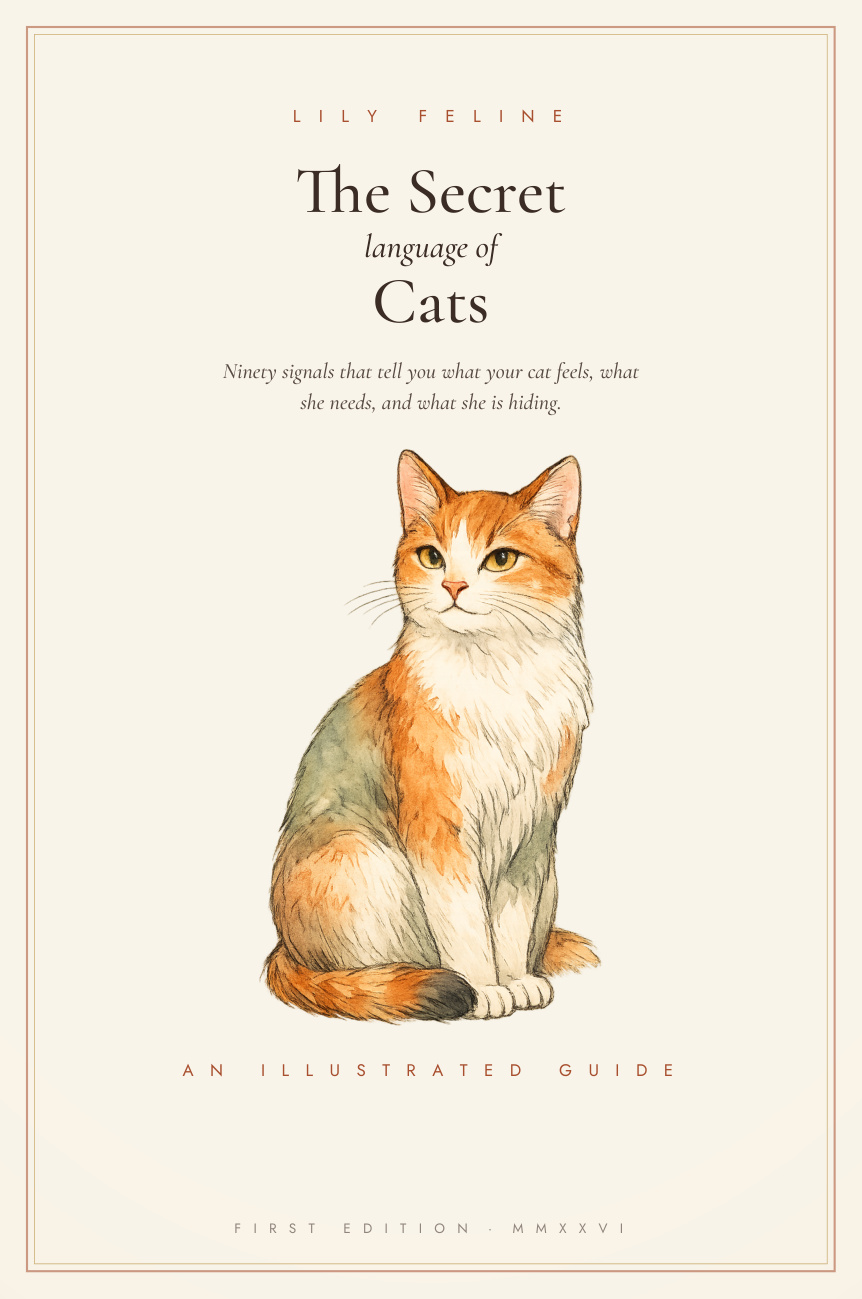
Cats don't shout. They speak in tail tips, slow blinks, ear angles, and where they choose to sleep. The Secret Language of Cats is an illustrated guide to the ninety numbered signals that tell you what your cat feels, what she needs — and what she is hiding.
"Cats are not difficult to read. They are simply not loud."
This book opens with the story of Lily's own cat — fourteen years old, sleeping a little lower down the house, taking the chair instead of the jump to the counter. Not hiding. Just quieter, smaller. For weeks she had been saying arthritis in the only language she had, and the person who loved her most translated it as age. Cats are extraordinarily good at hiding what hurts — which means by the time a change is obvious, it has usually been present for a while.
The Secret Language of Cats is the book Lily wishes someone had handed her at twenty-three: ninety numbered signals, each one showing what it looks like in a real house, what it actually means, and what to do — with bordered "See a vet" panels that are not optional reading. Somewhere in here is the sentence that makes you pick up the phone a fortnight earlier than you otherwise would have. That fortnight is the whole point.
Thirteen parts. Ninety numbered signals. Read it once for the shape of it, then use it as a reference for the rest of your cat's life.
Signals 1–14 — the tail carries the headline, the ears carry the mood, the eyes tell you how safe she feels.
Signals 15–22 — what the meows, chirps, purrs, and the silence actually mean.
Signals 23–32 — the quiet route changes and smaller lives cats use to hide what hurts.
Signals 33–38 — six signs that mean a car journey tonight, not an appointment next week. Read this part first.
Signals 39–43 — the one habit that catches more illness than anything else you can do at home.
Signals 44–53 — appetite, thirst, weight, and what a change in any of them is telling you.
Signals 54–59 — the most honest report your cat files every single day.
Signals 60–69 — scratching, hiding, night yowling, and the requests underneath them.
Signals 70–75 — meeting the hunting instinct so your nights get quieter.
Signals 76–80 — where, how, and how long, on the cat's terms.
Signals 81–84 — first days, first signals, and starting trust the right way.
Signals 85–87 — reading the politics of a multi-cat house.
Signals 88–90 — the changes that are age, and the ones that only look like it. Poppy's chapters.
"Signal 27 — weigh your cat weekly — caught my Milo's thyroid a good month before I'd have noticed anything. My vet asked what made me bring him in. A book did."
— Janet · Ohio, USA
"The emergency card lives on our fridge, filled in like the book says. When our tom strained in the box on a Sunday night, I didn't Google. I drove. The vet said those hours mattered."
— Colin · Yorkshire, England
"I cried at the Poppy letter, because I have translated things as age too. My senior girl now has steps to her window and pain relief — and I heard it because of Part XIII."
— Rosa · Melbourne, Australia
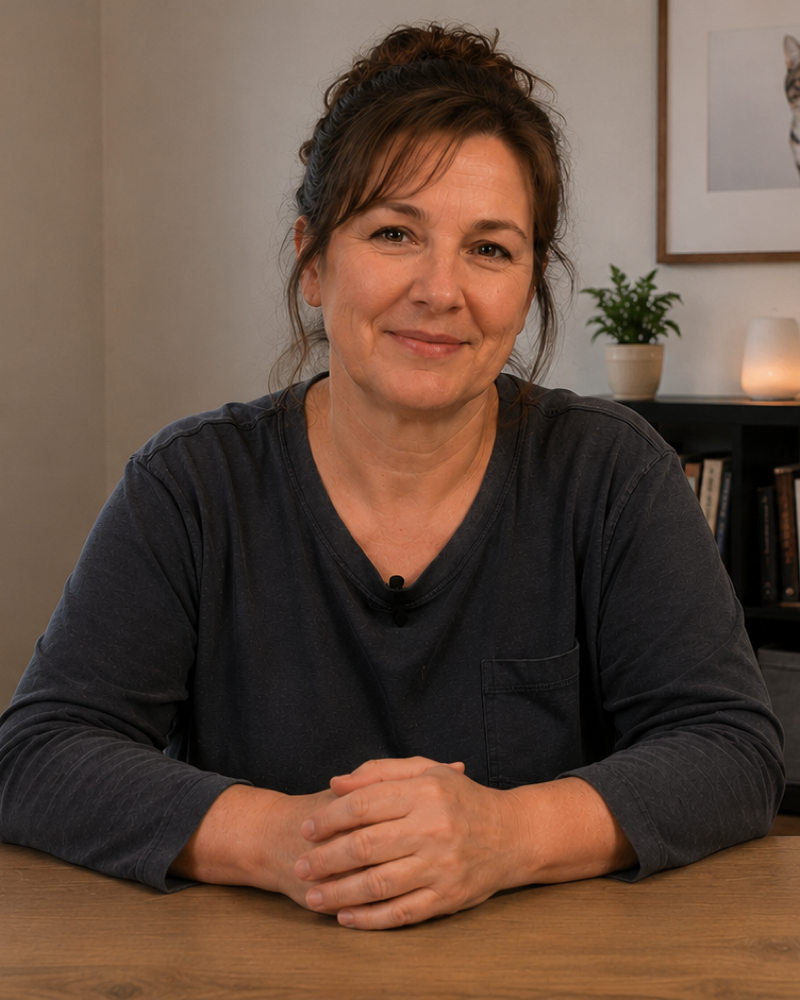
Lily Feline is the voice behind this guide and the channel — an unhurried, cat-first approach to living with cats. She wrote and illustrated this book as the thing she wishes someone had handed her at twenty-three, when she brought home her first cat and assumed that loving an animal was the same as understanding one.
She's also clear about the limits: a guide is not a veterinarian. Cats are experts at hiding illness, so any sudden change in eating, drinking, litter habits, or behavior is a medical question first. When this guide says call your vet, it means it.